Alice in XR
감각 단절과 회복의
XR 퍼포먼스
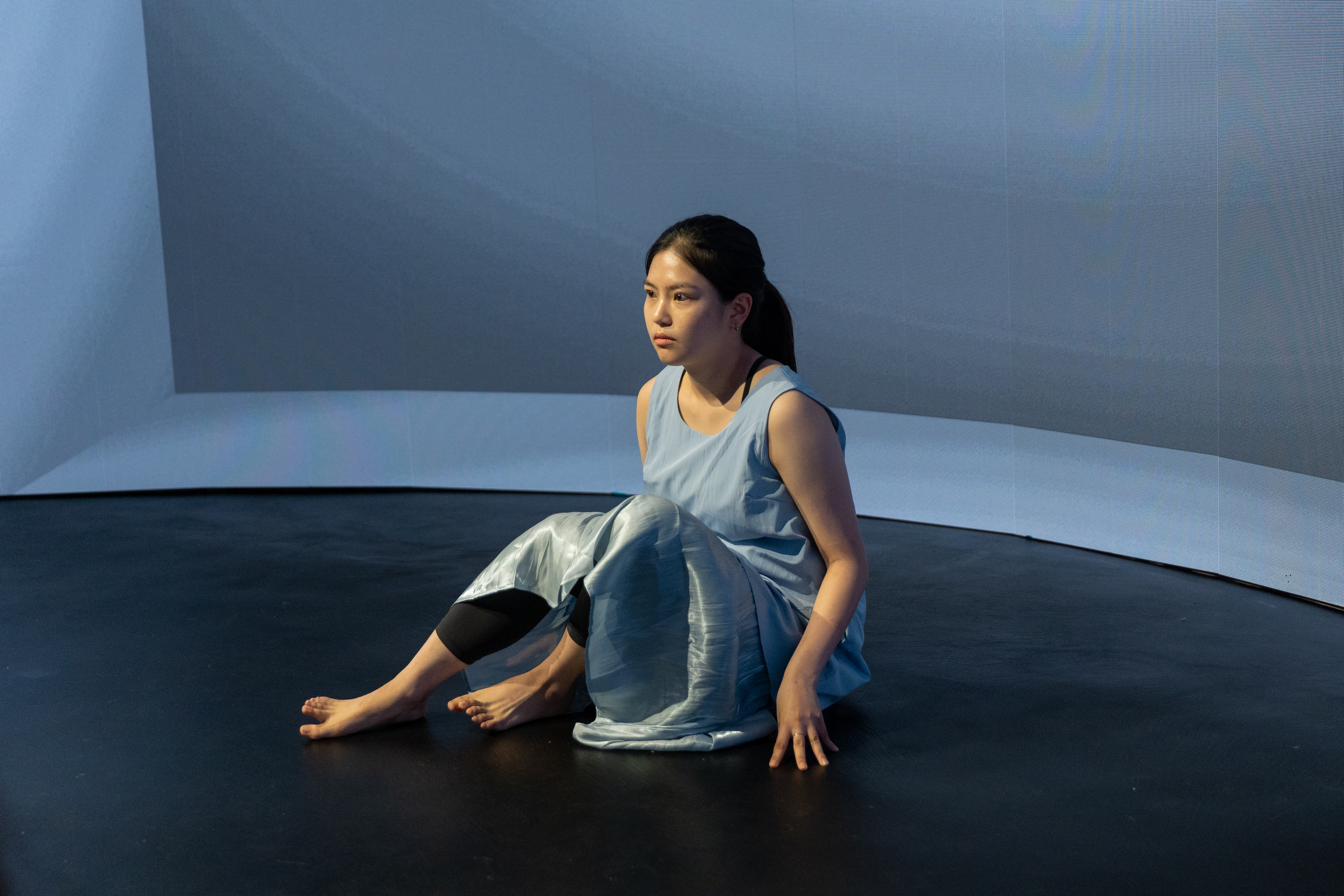
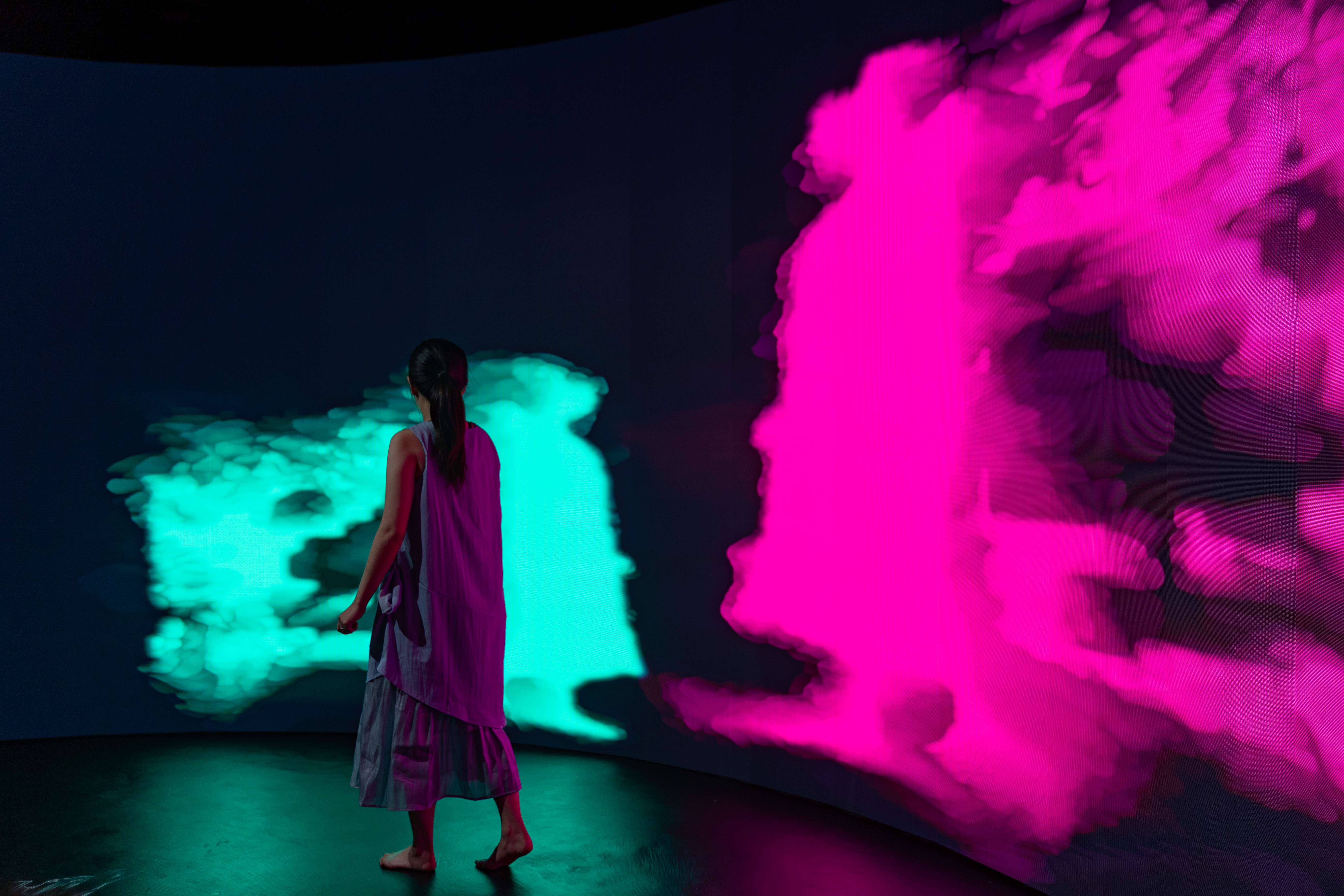
〈이상한 나라의 XR〉은 감각이 단절된 개인이 자신의 몸과 기억, 그리고 언어를 다시 회복하는 과정을 XR 퍼포먼스로 구성한 작품이다. 본 작업은 『이상한 나라의 앨리스』의 서사 구조를 차용하되, 동화적 환상을 재현하기보다 ‘추락’과 ‘왜곡된 공간’을 통해 내면의 심연으로 진입하는 감각적 경험을 구축한다.
우리는 살아가며 사회가 요구하는 정상성의 틀 안에서 스스로를 조율한다. 말투, 표정, 감정, 태도는 끊임없이 수정되고, 그 과정에서 몸은 점점 자신의 감각을 잃어간다. 본 작품은 그 상태를 ‘감각 단절’이라 정의하며, 감각 단절이 단순한 심리적 문제나 개인의 약함이 아니라, 생존을 위해 구축된 구조적 적응의 결과임을 드러낸다.
작품은 총 3개의 장면으로 구성된다.
첫 번째 장면 ‘1층, 나와 나’에서 퍼포머는 좁고 위태로운 의자 위에서 균형을 유지하며 자신을 설득한다. 이 공간은 안전한 자리처럼 보이지만 동시에 추락을 전제로 한 감옥이며, 퍼포머의 독백은 타인의 목소리를 자신의 언어로 내면화한 결과로 나타난다. “여기 위에 있는 것이 행복하다”는 반복된 자기 확신은 곧 생존 전략이자 자기 검열의 언어로 기능한다.
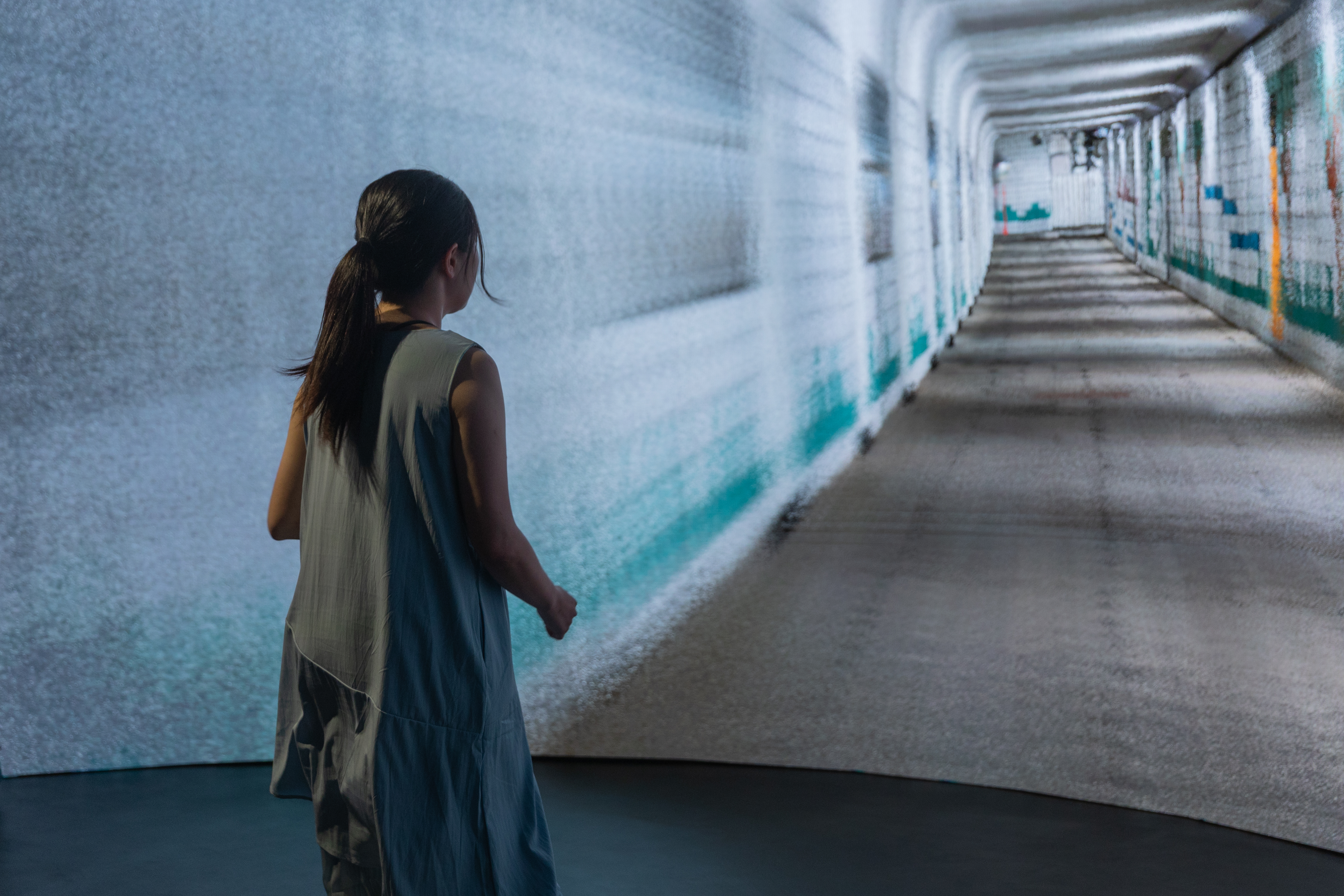
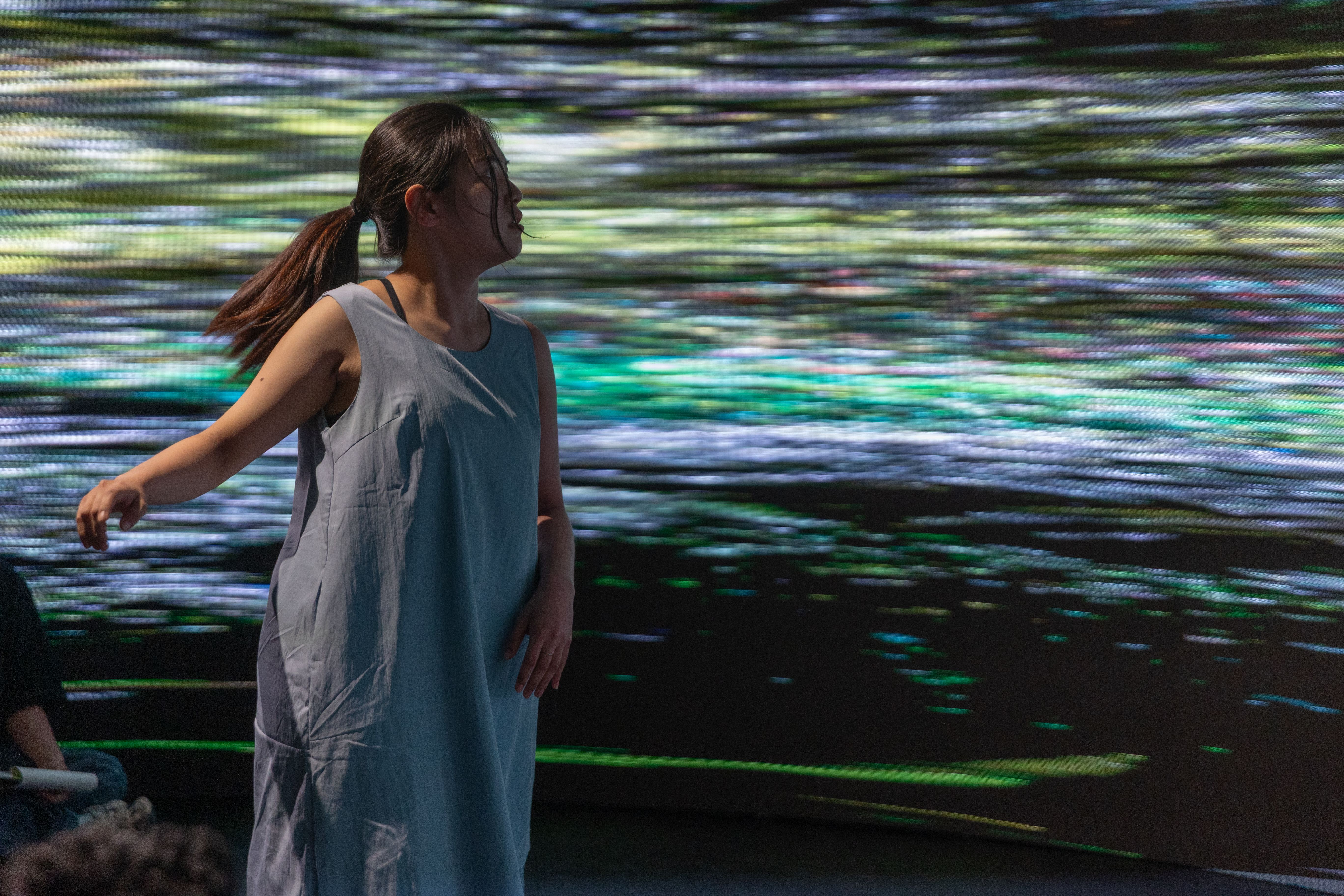
두 번째 장면 ‘B2, 아래로 더 아래로’에서는 억눌렸던 목소리들이 점점 선명해지고, 기억은 좌표와 날짜, 문장으로 환원되며 폭주한다. 칭찬과 기대의 언어는 점차 위협적인 주문처럼 변하며, 퍼포머의 몸을 다시 원래의 자리로 되돌리려 한다. 이 장면에서 XR 영상은 단순한 배경이 아니라, 기억을 재생하고 증폭시키는 심리적 기계로 작동한다. 관객은 파편화된 기록과 반복되는 언어의 소음 속에서 무너지는 자아의 내부를 목격하게 된다.
세 번째 장면 ‘도착했습니다’는 더 깊은 곳에서 발견되는 침묵의 공간이다. 퍼포머는 바닥에 누운 자신을 바라보며, 처음으로 판단이나 변명 없이 감각의 기억을 말한다. 이때 등장하는 ‘자루’는 억압된 감정과 상처, 혹은 어린 자아를 담은 신체적 오브제이며, 퍼포머는 그것을 끌어안음으로써 처음으로 자기 자신을 외부의 기준이 아닌 돌봄의 대상으로 받아들인다.
〈이상한 나라의 XR〉은 결국 ‘도착’이 곧 탈출이 아니라는 사실을 보여준다. 깊은 곳에 도착한 이후에도 세계는 완전히 바뀌지 않으며, 회복은 단번에 완성되지 않는다. 그러나 퍼포머는 더 이상 자신을 증명하거나 설득하지 않고, 감각의 언어로 자신을 선언한다. 마지막에 외치는 “이건 꿈이야”는 현실 부정이 아니라, 고통의 구조를 인식한 이후에야 가능한 능동적 재명명이다.
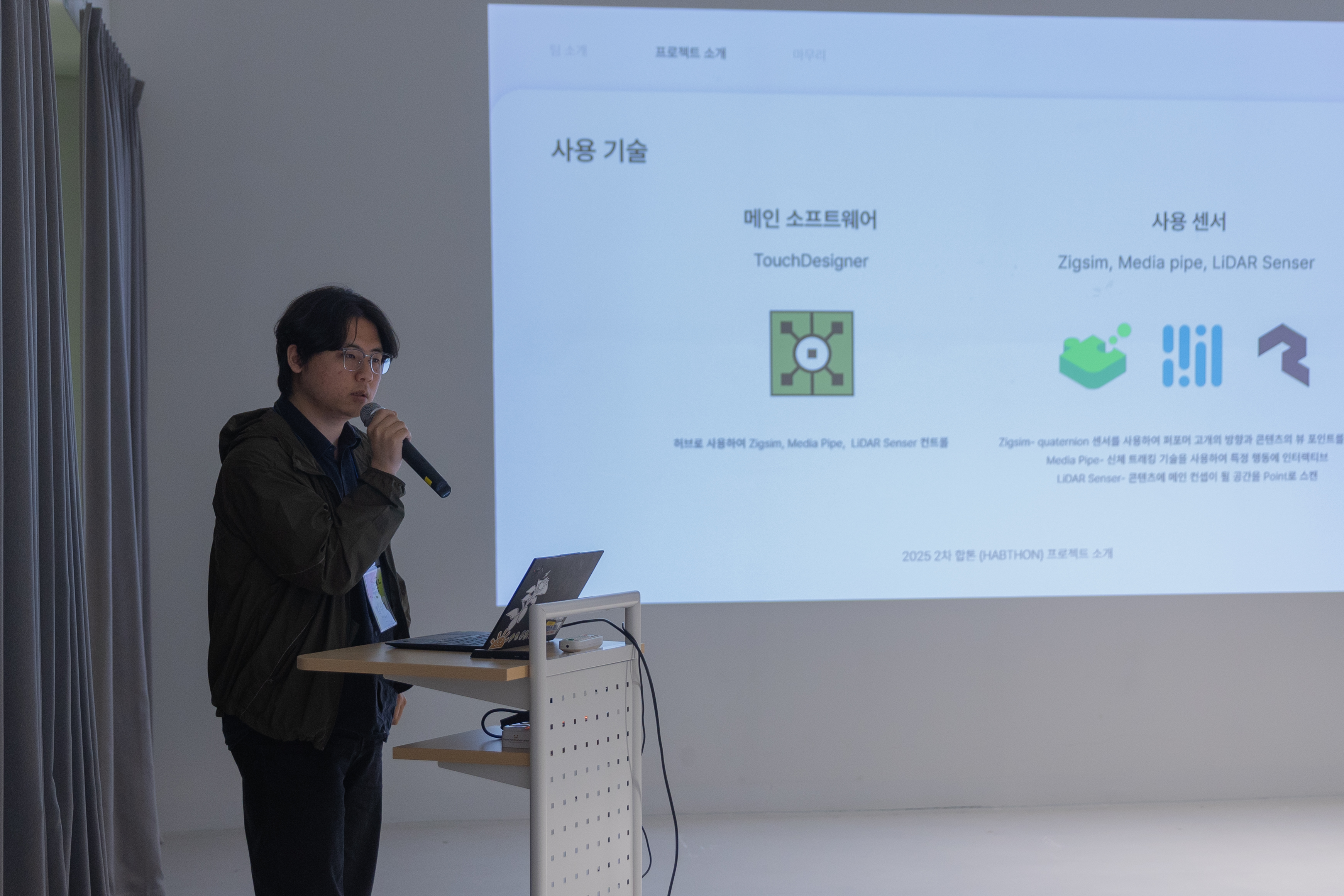
본 작업은 XR이라는 기술을 통해 현실을 확장하기보다, 오히려 개인 내부의 심리적 공간을 확장한다. 그리고 관객에게 질문한다. 우리가 정상이라고 믿어온 삶은 정말 안전한가. 혹은 그 안전함은, 감각을 포기한 대가로 얻어진 것은 아닌가.
XR Performance of
Sensory Disconnection and Recovery
Alice in XR is an XR performance that reconstructs the process of an individual with severed senses recovering their body, memory, and language. While borrowing the narrative structure of Alice in Wonderland, this work constructs a sensory experience of entering the abyss of the inner mind through 'falling' and 'distorted space', rather than reproducing a fairytale fantasy.
Living in society, we constantly tune ourselves within the framework of normality required by it. Tone, expression, emotion, and attitude are constantly modified, and in the process, the body gradually loses its own senses. This work defines this state as 'sensory severance' and reveals that sensory severance is not a simple psychological problem or individual weakness, but a result of structural adaptation built for survival.
The work consists of three scenes.
In the first scene, '1F, Me and I', the performer maintains balance on a narrow and precarious chair, persuading themselves. This space appears to be a safe seat, but it is also a prison premised on falling, and the performer's monologue appears as a result of internalizing the voices of others into their own language. The repeated self-assurance that "I am happy to be up here" functions as a survival strategy and a language of self-censorship.
In the second scene, 'B2, Down and Further Down', suppressed voices become clearer, and memories run wild, reduced to coordinates, dates, and sentences. The language of praise and expectation gradually turns into a threatening spell, trying to return the performer's body to its original place. In this scene, the XR video operates not as a simple background, but as a psychological machine that replays and amplifies memories. The audience witnesses the interior of a collapsing self amidst fragmented records and the noise of repeated language.
The third scene, 'Arrived', is a space of silence found deeper within. The performer looks at themselves lying on the floor and speaks of sensory memories for the first time without judgment or excuse. The 'sack' that appears at this time is a physical object containing suppressed emotions, wounds, or the young self, and by embracing it, the performer accepts themselves as an object of care, not an external standard, for the first time.
Alice in XR ultimately shows that 'arrival' is not 'escape'. Even after arriving at a deep place, the world does not change completely, and recovery is not completed at once. However, the performer no longer proves or persuades themselves, but declares themselves in the language of the senses. The final cry, "This is a dream," is not a denial of reality, but an active renaming possible only after recognizing the structure of pain.
This work expands the psychological space within the individual rather than expanding reality through XR technology. And it asks the audience: Is the life we believe to be normal really safe? Or is that safety obtained at the cost of giving up our senses?